It’s time for Canning and Preserving 101! I talk about this in my Pickled Okra post, but I’ve decided to make a more comprehensive page for different types of preserves and preserving, specifically the kind where you seal your preserved goodness for winters to come. And, if you wanted to check out how to make jams and jellies, check out last week’s post, Preserving Fruit: All About Jams, Jellies, and Preserves.
(We’ll talk fermentation, another and arguably better way to preserve food for the future, in another post.)
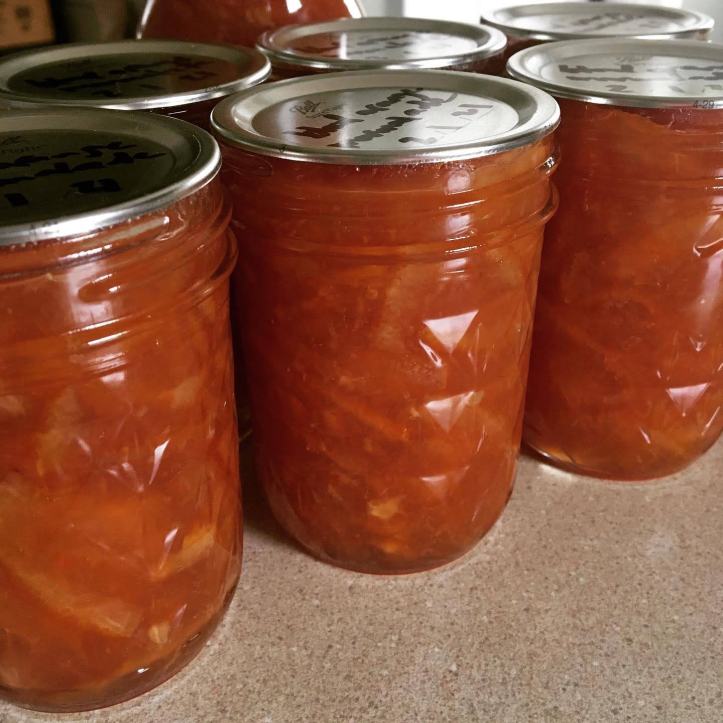
Water Bath Canning Basics
Hot water bath canning is simple and can be used for lots of different preserved foods, from jams and jellies to syrups, pickles, and tomato sauces. It takes some preparation, but once you’ve done it a few times, you’ll be an old pro.
Basic Equipment:
- glass jars designed for canning
- screw bands designed for canning
- sealing lids designed for canning
- a large pot with a lid that can accommodate your jars and cover them completely with water (I used a 12-quart stockpot with a lid before I purchased a canner) OR
- a pressure canner – this is a special heavy-duty pot that seals itself with gaskets on the lid, and comes with a pressure gauge. It can be used to pressure-can and hot-water can. Worth the money if you’re going to preserve a lot of food, and doubles as a pressure cooker.
- a small saucepan for lids
- heavy-duty tongs
- jar lifter
- a white dish towel (dyed towels will bleed into the water) or canning rack for the pot
- measuring tape or a ruler
- Optional but super useful items: magnetic lid lifter, bubble popper (even a butter knife or wire cake tester will do)
You can buy whole canning kits at home and garden stores, as well as online, which usually contain the tongs, jar lifter, lid lifter, bubble popper/rim measure, and jar opener.
Make sure the jars, bands, and lids you are using are designed for canning – other jars may break when exposed to the high heat and boiling process of water canning. Make sure you are using new lids, as well – lids that have been used for canning beforehand will not create a seal, as the wax has been used.
Get good quality canning lids. I have had the best luck with Ball lids; by contrast, when I bought cheap lids online when Ball lids were hard to find (thanks, pandemic hoarders), about 1 in 10 of my lids unsealed themselves while in storage for less than a year. Not cool. Spend the money for quality. (Note: 2024-2025’s Ball lids have either come unsealed, or didn’t seal properly in the first place, more often than any other year. I’m not sure what the deal is, but I’ll keep this updated.)
Screw bands and jars can be cleaned and reused for future canning. Just make sure the screw bands are free of rust and other deterioration, and the jars are free of cracks, chips, and other damage before you begin canning.
Basic Hot Water Bath Directions
- Wash jars, lids, and screw bands in hot, soapy water. Wash all materials used for canning thoroughly. Place screw bands aside to dry. Place your canning rack or clean dish towel at the bottom of your pot, and place jars on top of rack. Fill the jars about 2/3 full with water, and fill the canner up to that height with water. Fill the saucepan about 1/2 full with water and place lids in saucepan.
- Heat the canner and saucepan until the temperature reaches 180 degrees – do not boil. Keep hot until ready to fill.
- When jars are full according to your recipe and lids and screw bands are on, place the jars back into the canner. Fill the canner with water until the jars are completely covered by at least 1 inch. Bring to a rolling boil, cover, and process as directed in your recipe.
- Remove jars from canner, being careful not to overturn them, to a place they will be undisturbed for at least 12-24 hours. You’ll probably hear the lids popping as they seal!
- After 12-24 hours, remove the screw bands from the jars. Test the seals on the lids by carefully lifting the jars a few inches by the lid (use your common sense here and hold your hand around the bottom in case the lid doesn’t seal). If the center of the lid pops out (is not concave), and/or your lid does not stay sealed after testing, you cannot store these on the shelf – they must be refrigerated or re-processed. I recommend refrigerating, as re-processing a second time might make your product mushy or give it unpleasant flavors.
- Wipe lids and jar threads with a clean, damp towel. Store sealed jars in a cool, dark place for 6 months or more. I recommend storing them without the screw bands, as they tend to rust and sometimes get stuck to the jars if they’re left in storage longer than a few months.
Hot water canning is only for particular foods that have enough sugar and/or acidity to keep microbes (in particular, harmful bacteria, molds, and yeasts) at bay after boiling. This is why you’ll only see sweet items (like jams, jellies, syrups, and the like), vinegary items (like pickles), and acidic items (like tomato sauce) used for hot-water canning.
For anything else that you aren’t fermenting or dehydrating, you’ll need to pressure can it.
Pressure Canning Basics
Hot water canning kills microbes that a) can’t withstand boiling temperatures and b) won’t regrow in acidic environments. The sugar in jams and jellies binds with water, preventing bacteria from getting at the water and staying alive. The acidity in pickles and tomato products makes an inhospitable environment for most microbes.
However, this means that you can’t use hot-water preservation to can most vegetables as-is (like green beans, squash, etc.), anything with meat or fish, or basically anything that doesn’t have high acidity.
Enter pressure canning.
If you’re looking to can things like your own stocks, soups, stews, non-pickled vegetables, and low-sugar (or no sugar) fruit, get yourself a pressure canner – it’s worth it, even just to make and preserve your own meat stocks. They come with very thorough directions, and your local Cooperative Extension often checks your pressure gauge for free every year, because they don’t want you to die from botulism. Yay!
That being said, we can’t have a discussion about pressure canning without talking about everyone’s favorite microbes, Clostridium botulinum (AKA the one that causes botulism) and staph bacteria. These buggers can survive boiling temperatures, and are deadly if ingested or even touched. Yikes! Botulinum is particularly associated with canning because the spores grow in an anaerobic or near-anaerobic environment – that is, an environment low or devoid of oxygen. That is, your canned goods!
Thankfully, botulinum hates sugar and acidic environments, so most of your jams and pickles done with hot water canning should be fine if done correctly.
However, foods that don’t have extra acidity and sugar to prevent their growth have to be heated to at least 240 degrees F (so, hotter than boiling water). This can only be done with pressure canning, which uses steam instead of boiling water to preserve food.
In order to pressure can, you need a pressure canner. If you’ve ever used a pressure cooker, they work in the same way – the lid is sealed with gaskets, with a pressure gauge attached to the lid. You heat the canner to a certain pressure for a specified amount of time (each recipe is different).
The process takes a good deal longer than most hot water bath recipes, and you need to stay in the vicinity of the canner to make sure it stays at the same pressure. However, you tend to pressure can a lot of jars at a time, the smaller jars can be stacked (so, you can process 20-24 jars rather than only 9 or 10), and it’s a good exercise in slowing down and staying put. I like to read a book while I wait for my broths to process.
Obligatory Food Safety Warnings
(AKA Here’s How Not to Die and/or Kill Your Friends and Family)
The subtitle there is somewhat in jest. I know so many people who have been turned off by home canning because they’ve attended a class with an instructor (or read something by an author) who frequently and emphatically reminded the students of the ways that canning can go wrong, rather than right. Yes, botulism is super serious, and yes, humans are living longer because we’re not exposed to as many harmful microorganisms in our food, thanks to food safety regulations, which need to be followed at home.
However, I’ll also say this: people have been home canning for over 200 years. Your grandmother or great-grandmother likely canned, without lots of fancy equipment, and you’re here and alive and well. Thousands (hopefully millions) of people preserve at home today.
Be smart, follow directions, and don’t use sketchy recipes, and you’ll be fine.
Food Safety Guidelines and Reminders
1. Use Hot-Water Canning for the Right Stuff. As mentioned above, hot water canning is for high-sugar products (like jams, jellies, preserves, and syrups), high acid products (like pickles), and tomato products with added acidity. All other types of preserves should be pressure canned, fermented, or dehydrated.
2. Use Pressure Canning for Non-Acidic Foods. Soups, stews, vegetables that aren’t pickled, meats, seafood, and other non-acidic foods should be pressure canned. Follow the instructions exactly as written.
3. Use Tested Recipes. I repeat: use trusted, tested recipes with the correct amounts of acidity to safely preserve food. Good sources include:
- USDA: National Center for Home Preservation
- Your local cooperative extension offices and websites
- Ball Canning Books (they have several)
- Vetted magazines and published books (check their sources)
All of my canning recipes are based on the Ball canning books or state cooperative extensions, with tweaks only for flavor without changing acidity levels.
Random bloggers on the Internet with no credibility or clear sources listed should not be trusted. Also, be wary of untested old-time methods or recipes – there’s a reason our cooperative extensions update their guidelines frequently, and it’s to keep you alive and well.
4. Watch for Food Spoilage. Despite your best efforts, sometimes, your canned food goes bad. It happens. Under no circumstances should you eat or even taste canned food that has the following signs of spoilage:
- Broken seal (the lid has popped open, or is broken in any other way)
- Mold or yeast growth
- Cloudiness
- Gassiness
- Spurting liquid
- Bubbles rising in jar after cooling
- Seepage
- Fermentation
- Slime
- Unpleasant odor
Throw out any spoiled food. If it’s high-acid or high sugar food, you can sanitize (not just clean) and reuse the jars for canning – just be sure to check for cracks, chips, etc. in the glass, and toss out any broken jars.
Any spoiled low-acid foods should be treated as contaminated with botulinum toxin and need to be detoxified and disposed of completely, jar and food. For more details on how to handle spoiled food, check out the info from the National Center for Home Food Preservation.
Got it? Good. Now go do some canning, and happy homesteading!
 The Crunchy Baker